
Introducing AWARE™
Dozens of Asian textile producers are saying the same thing: western traceability is broken. I think I've joined a company that can fix it.

Let me introduce you to AWARE™.
It’s the new company I'm working with. It’s a traceability platform. I love the vision. I enjoy the work. It feels like there’s a huge amount of potential.
Since I joined I've been exposed to dozens of textile producers and every single one is leading me to the same conclusion: western traceability systems are broken, producers want better, and there's an opportunity here to solve the data problem in sustainability.
Asia is way ahead and we’re just noticing.
It has been a trend for a long time now and whether it’s the right time because of the craziness trump is talking about or it’s just the right time, I don’t know, but there are strong signals that Asia - especially China - is investing heavily in access to European markets and trying to break free of ‘western systems’.
European markets because fuck the US and it's close, and break free of ‘western systems’ because they’re old, outdated, and fraudulent. Bribes, bullshit, and bureaucracy weigh everything down.
I’ve been exposed to dozens of producers since joining AWARE™ and they’re all doing it, complying with these systems, because they have to, but they’re fed up. So, they’re looking for opportunities.

Regulation
There are heaps of regulations and laws and compliance things the EU, the UN, and eventually the US (when it’s done with its tantrum) are coming up with that are going to depend really quite heavily on Asian producers.
If a brand actually wants to be compliant and meet regulations they’re going to need to get more reliable data than they’re getting now. This is hard, not because the data isn’t there but because most brands barely know where their stuff is made.
There are other people in the supply chain who don’t give up the details of their upstream. People and organisations whose business relies on this kind of obfuscation. Yea, I know. Crazy.
It’s already starting to happen, Prada and co are already requiring a greater level of transparency from their suppliers and cancelling contracts if they can't.x Yea. It’s happening.
Impact
Finally, you and I both know there’s a lot of bullshit ‘impact’ stuff out there. People talking about the impact they’re making. Corporate greenhouse gas accounting, that kind of thing. You and I both know there’s lots of good intentions out there too, lots of good people who really care, trying really hard.
But I imagine we have both also seen first hand that it doesn’t matter how good your intentions are if the data you base your predictions, models, or roadmaps on is floored. The road to hell is paved with something or other.
There needs to be better, more reliable ways to get data. I’ve seen the problem from a few perspectives now. It’s the hardest problem in sustainability.
Joining up
I think I’ve found a company that’s solving these things. And I’ve joined them.
I August time I was introduced to Feico, the founder of AWARE™ - this Dutch guy - oh he’s a talker.
He says he’s been in the fashion industry for decades, he’s done the bad guy bribing things, he’s lived and worked in Asia for many years. He’s started, run, and exited companies in the industry before. And now he has three kids and one grand kid and he’s starting to hear them.
He wants to leave them a better world, change the game he used to play. And well, I like it. If he wants to invest his money in doing something I’ll help him.
Then he started talking about the points I mentioned above. He started telling a story that I know and believe very well, but from a completely different angle.
He came to the same conclusions we do: ‘data reliability is the problem’, ‘Sustainability doesn’t work if you can’t connect it to someone’s wallet’, ‘transparency is the only real solution’, ‘there are old systems ripe for changing with simple, well understood, solutions.’
I was in.
I joined and off we went. 8 people here in Amsterdam, 8 people … ish … spread across Asia, resellers or employees.
We’re doing good business ARR and they raised some serious money over the last two years and slowly but surely, they're expanding reach and client base.
I’ve met with all the folks, I talk to them, I get their thoughts on how it’s going, on the business, on the opportunity, on the problem.
And let me tell you, I’ve been burnt one too many times now by someone not being straight with me about the economics of a business. At least this time it was honest. They’re stable, they have runaway but they can’t last forever. But they think it’s time, they’re ready to really invest to get this ball rolling down hill. And here’s the thing.
Whether it’s true or not, I feel it.
It feels right. I see so much damn potential. In the use case, the business model, the people, and the industry. It feels good. It feels ripe. It’s a straightforward enough problem with well understood solutions.

A proposition of value
Now I know what you’re thinking: What makes this different? Why hasn’t it already been solved? If it had so much potential surely it would be solved already?
Yea I knew you’d say that, but that’s the thing. It’s this founder and his approach that are unique. I look at the competition and I think about the organisations I’ve worked in that have to do some amount of supply chain tracing and you find one approach - working backwards.
Talk to a brand, a customer, and get their supply chain contact details and begin the long arduous task of calling them up, sending them forms and spreadsheets and some way somehow retroactively getting data out of it.
I don’t need to tell you how rife with wasted time, human error, and likely BS that process is. AWARE™ doesn’t do that. The opposite. Start at the source. Build a producer network as close to the source as possible and go wide.
The idea is a brand could talk to us and say ‘we’d like to trace our supply chain, how long will it take for you to onboard our suppliers? Most consultants say about 6 months?’ And we say, ‘No worries, they’re already on-board.’
Yep. It could be that. But why doesn’t everyone do it? Well I could talk about how people don’t trust Asia, I could talk about the western bias seeing Asia as ‘programmable’ or a commodity. Or I could talk about the righteousness of us all assuming everything is done well and right and we don’t need real traceability.
But the hard truth is I think because this approach is really hard. You have to have good and right contacts in Asia, in the right places, and you need to have their trust. You need to work for them. Design for them. Build for them. Prioritise them. And that’s hard. It’s literally far away.
Plus, they don’t need us. They’re doing it anyway and at the end of the day money talks. When they have systems that are completely traceable they’ll take the market. Our premise is that now is the time to join that wave before we get left behind.
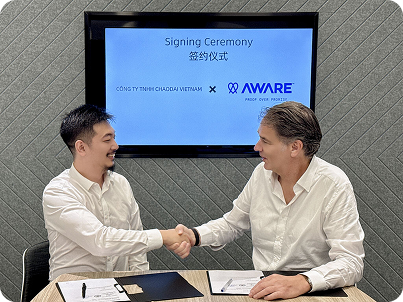
Now this guy, this founder, he's doing the hard part, I see it - he can do it. He goes out there every quarter or so to meet and greet, go to factories and farms and meet with big fish to talk business. He has people on the ground and local offices working for the company full-time.
Textiles/fashion producers can hardly be called a niche, it’s a massive business, but he’s found his little pocket, he has a tool, a platform, an MVP that is obviously an MVP and rough around the edges but is being used for real business and working, at scale - hundreds of users(!!) - the wheels are turning.
Now, he wants to scale. Now I want to help him scale. This could be cool. I’m hopeful. Know anyone who might want to invest?